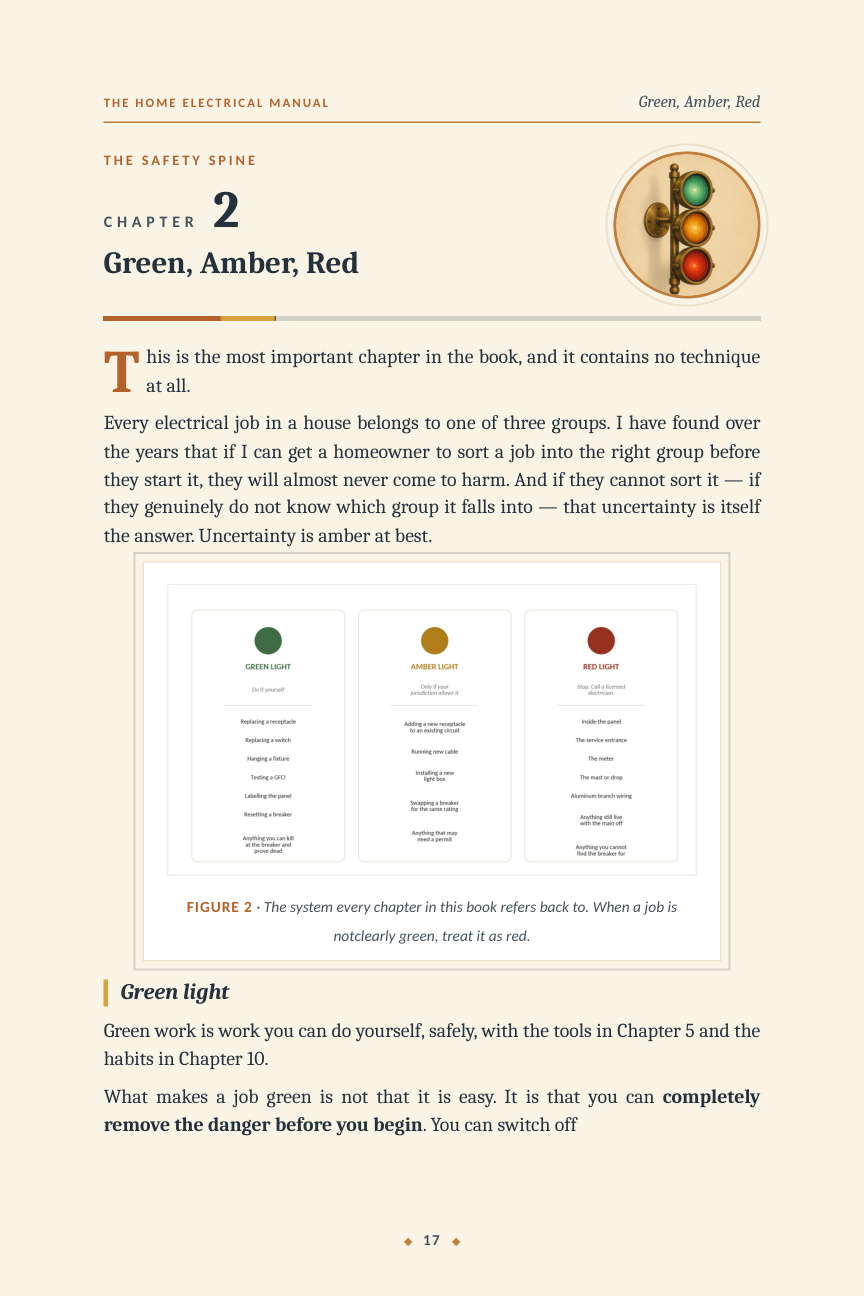
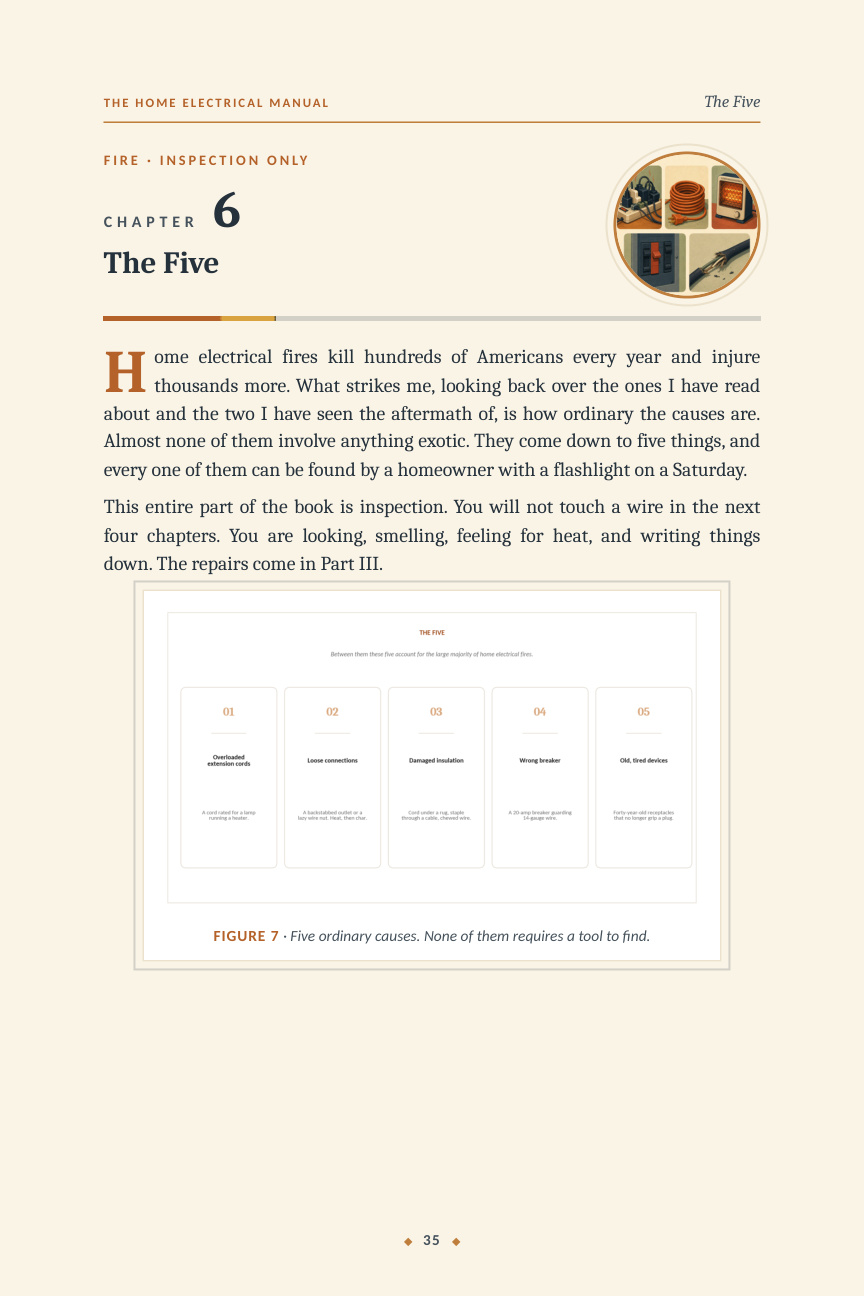
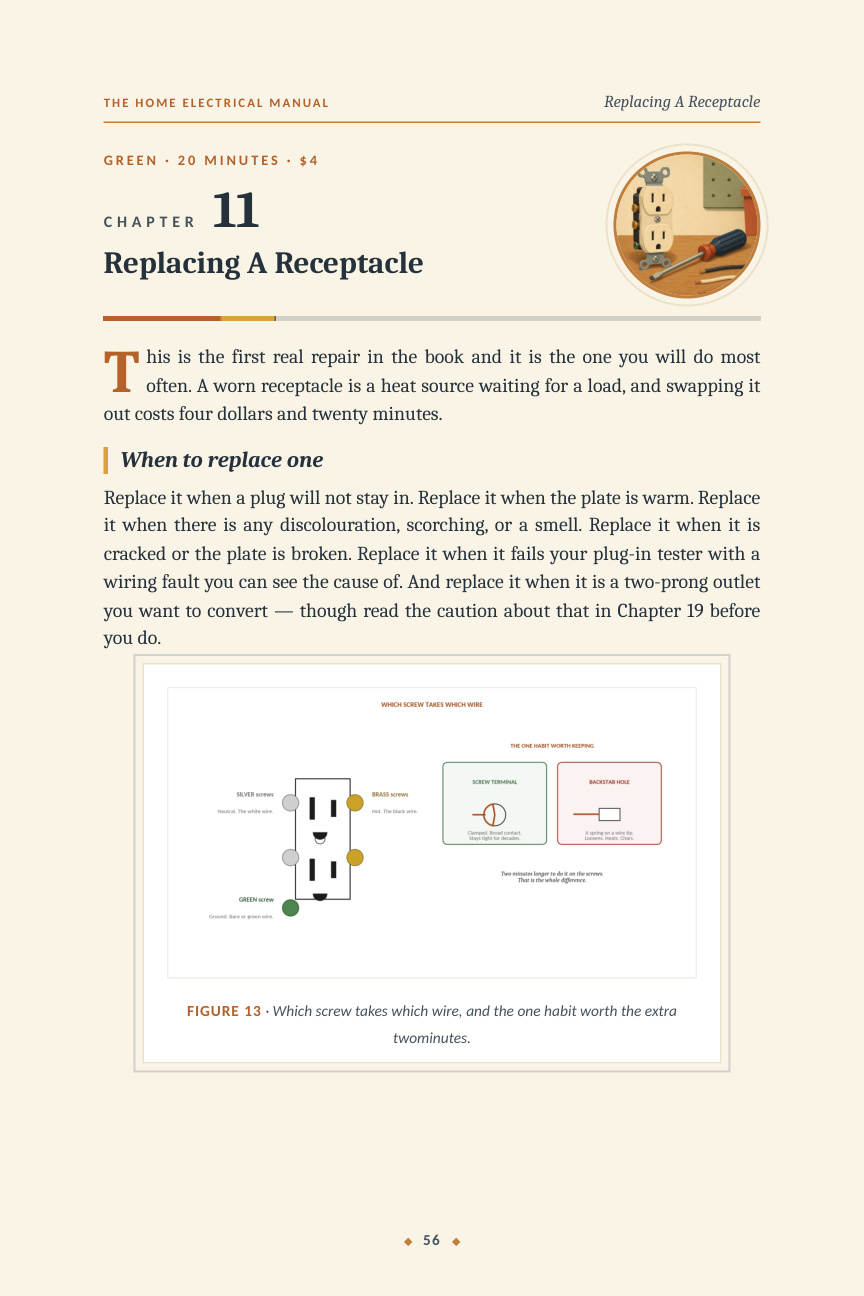
Most electrical work in an ordinary home is either completely safe for a careful homeowner or completely beyond them. Very little sits in the middle. This manual draws that line once, in plain language — every job sorted green, amber, or red.
Instant download · Yours forever

“Respect, not fear. You do not need to be afraid of a circuit you have switched off, tested, and proved dead.”
Wally Sparks · Before You BeginI have been pulling wire and chasing faults in people's houses for a long time. Long enough to have stopped being surprised by what turns up behind a switch plate.
Here is what I have learned that matters most, and it is not a technique. It is this: the majority of the electrical work in an ordinary home is either completely safe for a careful homeowner to do, or completely beyond them. There is very little in the middle.
The trouble is that almost nobody has ever been shown where the line falls.
“So people either touch nothing at all and pay two hundred dollars for a fifteen-minute job, or they touch everything and end up with a wall that smells like burning fish.”
This book is my attempt to draw that line clearly, once, in plain language. It is not a code book — the National Electrical Code runs to hundreds of pages, it is revised every three years, and your town may be enforcing an edition from a decade ago. I cannot tell you what the rule is on your street.
What I can tell you is what the work actually involves, what good practice looks like, and which jobs need somebody with a license, a permit, and insurance. Every chapter opens by telling you what the trouble is, tells you what colour the job is, walks you through the work the way I would standing at your elbow, and finishes by telling you where to stop.
The question is almost never “how do I wire this?” The question is “is this mine to do at all?” — and that is the one thing nobody puts in the title.


You do not need to read it in order, though the first two parts make everything after them easier. Each chapter is tagged with the colour of the work it covers.


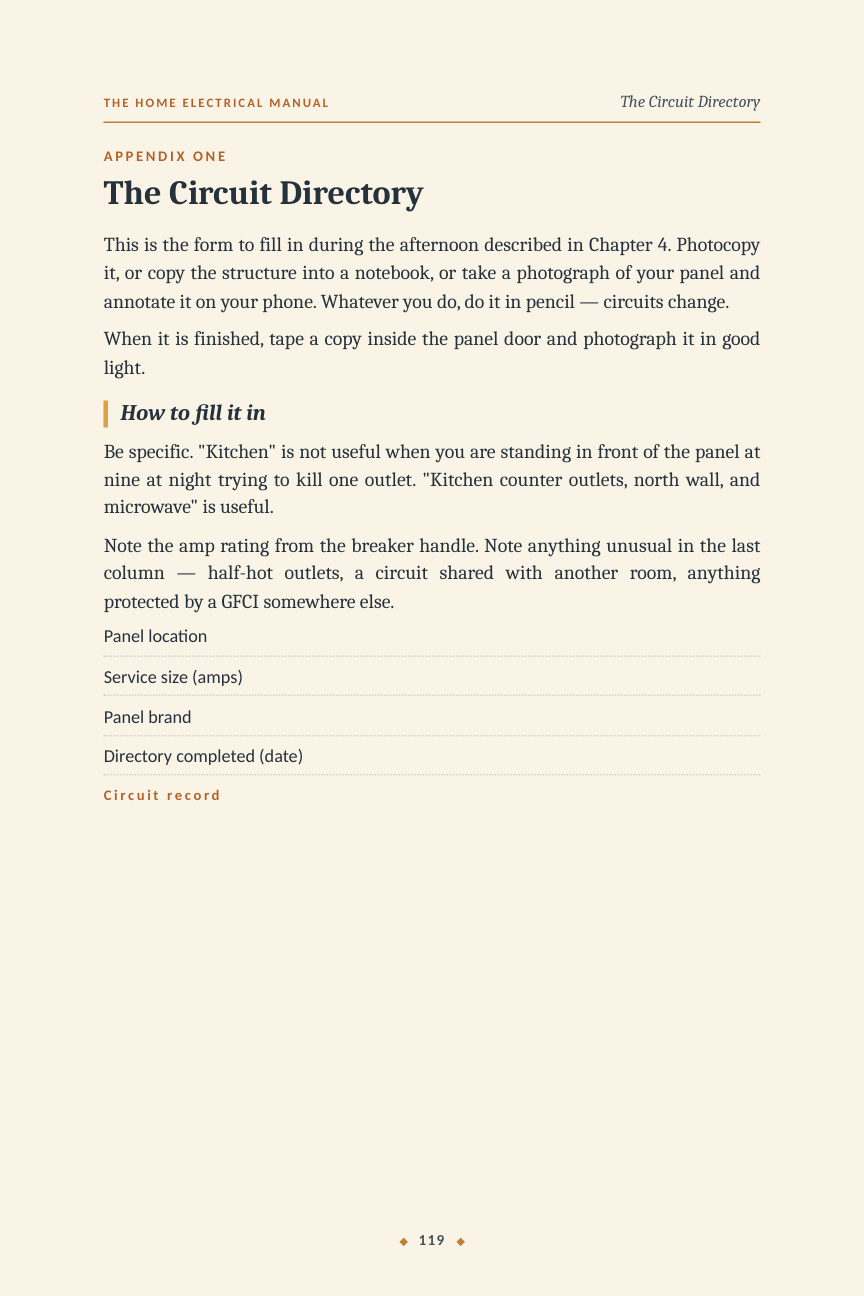
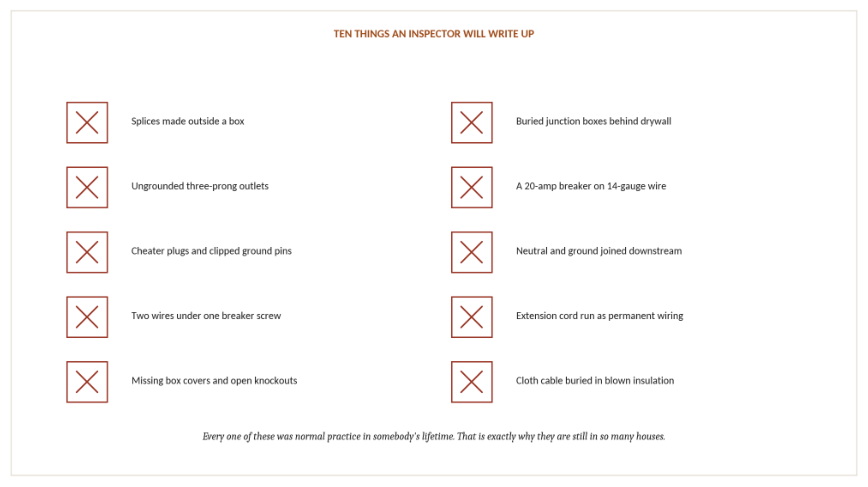
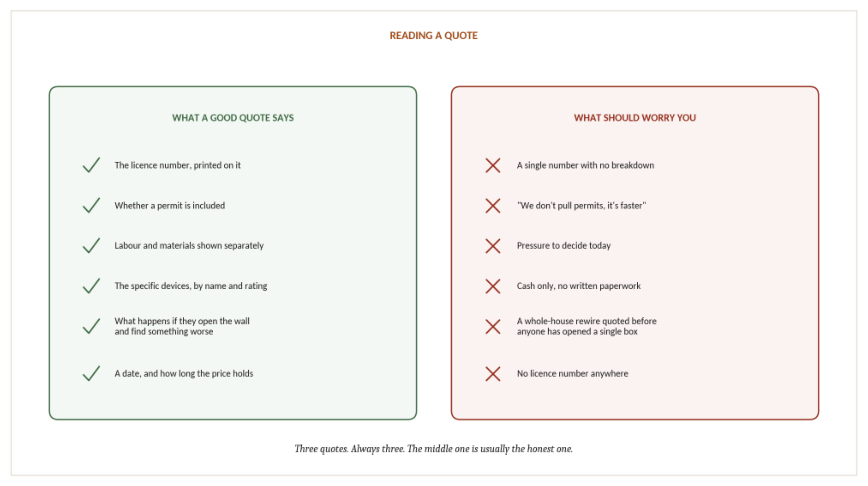
Pages from the illustrated edition — set in Caladea and Carlito, diagrams drawn by the author.


Instant download · Yours forever
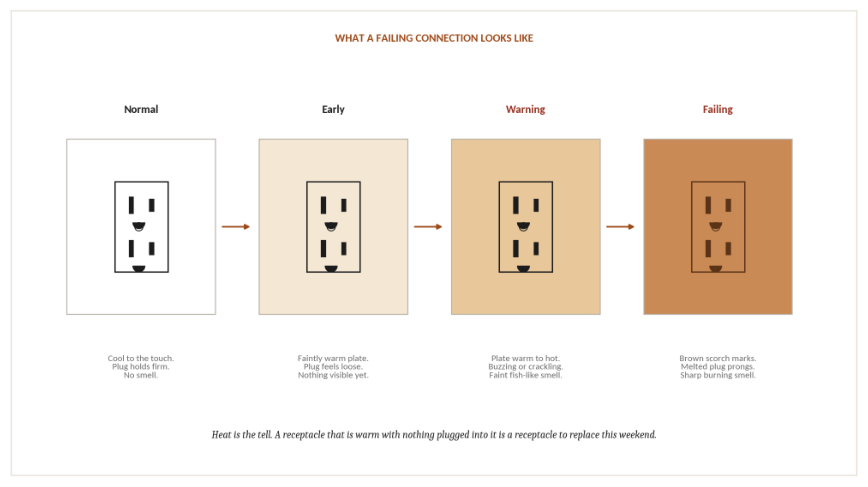
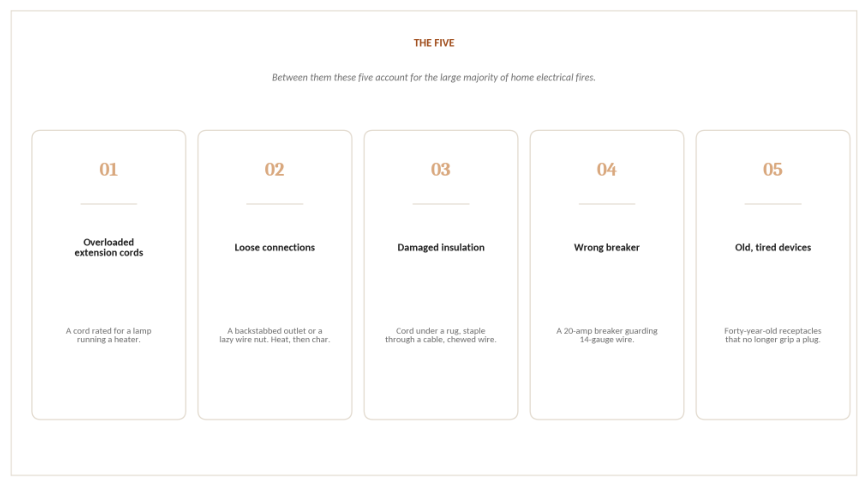
“Did the ninety-minute walkthrough on a Saturday with a flashlight and a notebook, exactly as written. Found a space heater on a lamp cord behind the sofa and a receptacle in the dining room so loose the plug fell out on its own. Neither one would have occurred to me.”
Placeholder — Ohio“I have owned this house nineteen years and never once opened the panel door. Mapped every circuit in an afternoon, filled in the directory, taped it inside the door. My wife says it is the most useful thing I have done all year.”
Placeholder — Oregon“What I actually wanted was permission to stop worrying. Chapter 2 gave me that. Two of the jobs on my list were green and I did them; one was red and I stopped reading and called somebody, which is exactly what he says to do.”
Placeholder — Pennsylvania
My name is Wally Sparks. I spent my working life as an electrician, in other people's houses, mostly doing the ordinary things — a dead outlet, a breaker that would not stay in, a light that somebody's brother-in-law had hung off the cable instead of the box.
What I saw over and over was not bad wiring. It was good people with no way of telling a fifteen-minute job from one that could kill them, and no way of finding out except by trying. Some of them paid two hundred dollars to have a receptacle swapped. Some of them opened a panel they had no business opening.
I am retired now, which means I finally had the time to write down the part I always wished I could hand somebody on the way out the door. Not how to be an electrician — that takes years, and most of those years are spent learning the things that go wrong. Just where the line falls, and how to tell which side of it you are standing on.
Every diagram in the book is mine. I have not written a chapter I would not be happy for my own family to work from.
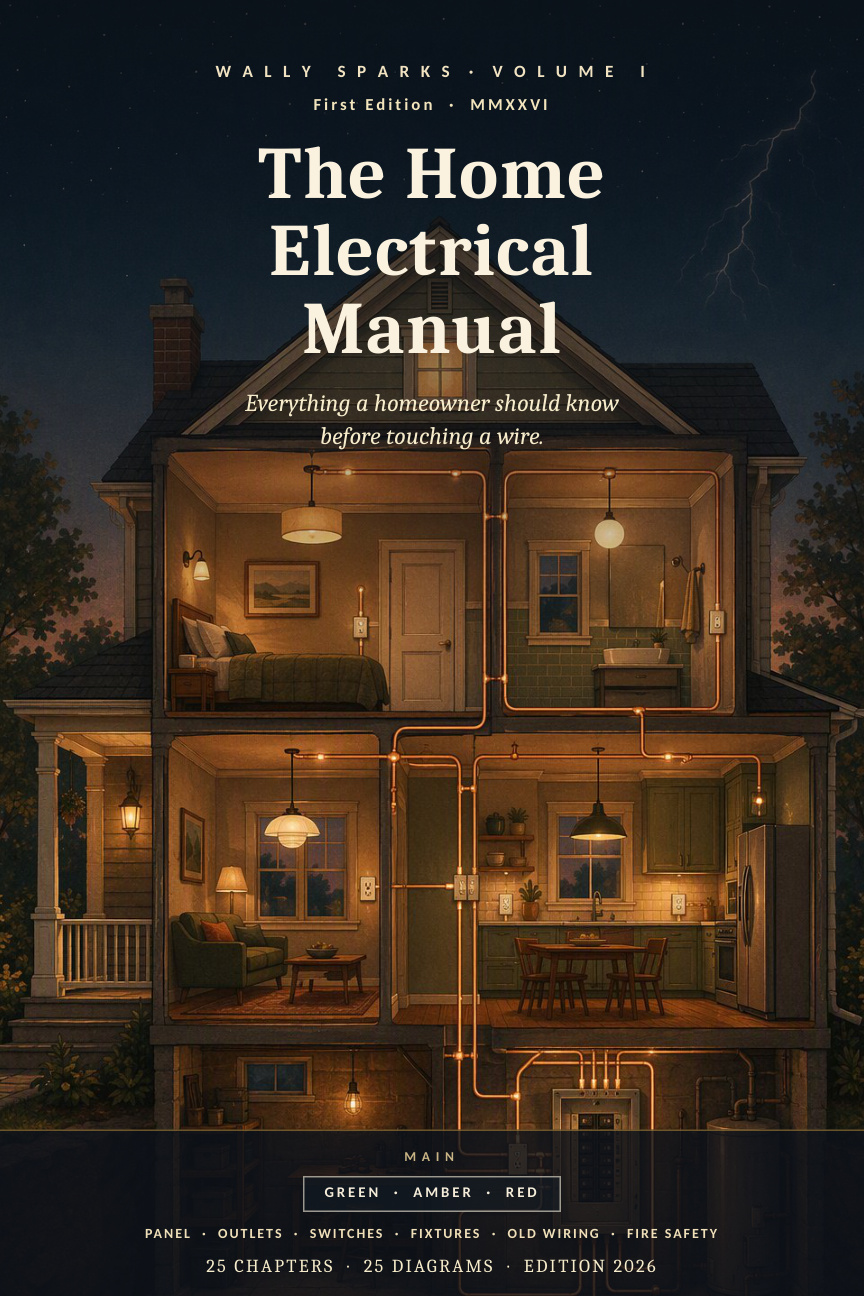
Everything a homeowner should know before touching a wire.
First Edition · Illustrated · 2026
Instant download · Yours forever
Visa · Mastercard · Amex · PayPal · Apple Pay
No, and no. The National Electrical Code runs to hundreds of pages, it is revised every three years, and your town may be enforcing an edition from a decade ago with local amendments stapled to the back of it. I cannot tell you what the rule is on your street — what I can tell you is what the work actually involves, what good practice looks like, and which jobs need somebody with a license, a permit, and insurance. Becoming an electrician takes years. This makes you a homeowner who knows exactly when to put the screwdriver down and pick up the phone.
Because a video answers one question and then it is gone. The book is the whole map in order: the colour of every job before you start it, an entire part that is inspection only, the four-step habit for proving a circuit dead, the panel chapter that tells you where I stop, and an appendix you fill in and keep. You can watch me replace a receptacle. You cannot watch me sort your particular house into green, amber and red — that is what the 136 pages are for.
Because a single call-out to swap a worn receptacle runs somewhere north of two hundred dollars in most of the country, and I have taken that money more times than I am comfortable with for fifteen minutes of work. If this book stops one unnecessary call-out it has paid for itself several times, and if it stops one person opening a panel they had no business opening it has done something I care about more than the money.
Especially for you. Part II is four chapters of pure inspection — you are looking, smelling, feeling for heat and writing things down, with a flashlight and a notebook, touching nothing. Plenty of readers never go past it, and they still find the loose connection that has been quietly cooking inside a wall for six years. What makes a job green is not that it is easy. It is that you can completely remove the danger before you begin.
That depends entirely on where you live, which is exactly why amber exists as a category. Most of the United States allows a homeowner to do electrical work on the home they actually live in; many jurisdictions require a permit anyway, some require an inspection at the end, and a few require a licensed contractor regardless of who owns the house. The book tells you which jobs raise the question and what to ask your own building department. Confirm what your jurisdiction allows before you begin.
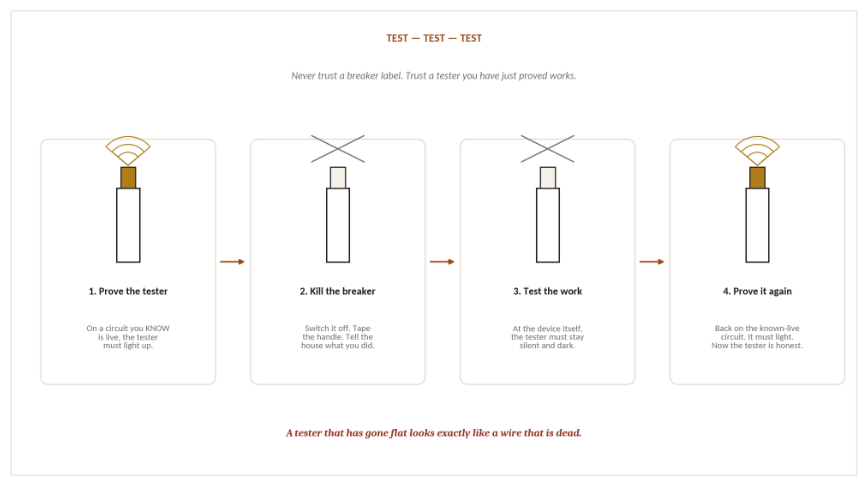
A PDF, delivered the moment you order. It reads on a phone, a tablet or a computer, and it prints cleanly at home if you would rather have paper in the basement — the Circuit Directory in the appendix is designed to be printed, filled in with a pencil, and taped inside the panel door. Instant download, yours forever.
Wait — one thing
A single visit to swap a worn receptacle runs north of two hundred dollars in most of the country. The whole manual — 25 chapters, 25 diagrams, every job sorted green, amber or red — is $27 today.
Get the Home Electrical Manual — $47 $27 or see what's inside →